Why Restore Prairie Dogs and Their Ecosystems?
We’re glad you asked!
-
They are a keystone species
A keystone species is a species that has unique and significant effects on its ecosystem. They play a critical function in determining the structure of natural communities, and their removal causes substantial changes in species composition and other characteristics of the ecosystem.
-
They have strong family bonds
Prairie dogs live in close family units called coteries, and several coteries make up a colony. Prairie dogs can fiercely defend their territories. Individuals will even warn the others of threats and predators at the risk of their own safety.
-
They are ecosystem engineers
Ecosystem engineers modify the availability of resources to other species by physically altering environments. Prairie dogs contribute to shaping grassland ecosystems in three main ways: burrowing, grazing, and providing food for other animals.
-
They cannot be found anywhere else in the world
Prairie dogs and their ecosystems are only native to North America. This unique landscape of plant and animal species cannot be found anywhere else, so it is up to us to preserve and restore its biodiversity for generations to come.
-
Their complex language is fascinating
We are not voices for the voiceless. Prairie dogs have no problem speaking for themselves! In fact, prairie dogs have the most complex language ever decoded by humans, even above dolphins and chimps. Their high-pitched sounds account for the type of predator, what they look like, where they area and so much more. This has put the prairie on the frontlines of animal language research!
-
We wouldn't have the prairie without them
Researchers believe that up to 150 other species rely on prairie dogs and their role in the ecosystem. This includes endangered species such as the Black Footed Ferret! Therefore, the continued extermination of prairie dogs leads to a great loss in prairie biodiversity.




Where Do They Live?
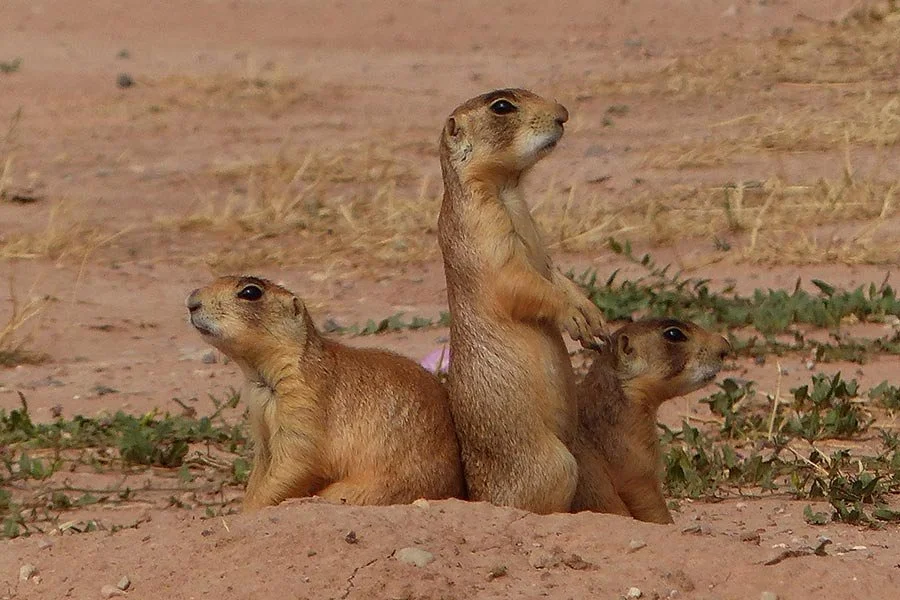
Prairie dogs live in territorial family units called coteries across the Great Plains of North America. Coteries are comprised of matriarchal dominate families that are closely related but do not mix with other coteries. The size of a coterie depends on the species, but can range from 1-26 individuals. These coteries form something similar to neighborhoods, and several coteries make up a prairie dog town or colony.
They dig to create an elaborate burrow system for themselves that many other species rely on, including the endangered Black Footed Ferret. This construction of their environment makes them ecosystem engineers, creating habitat and resource opportunities that support biodiversity.
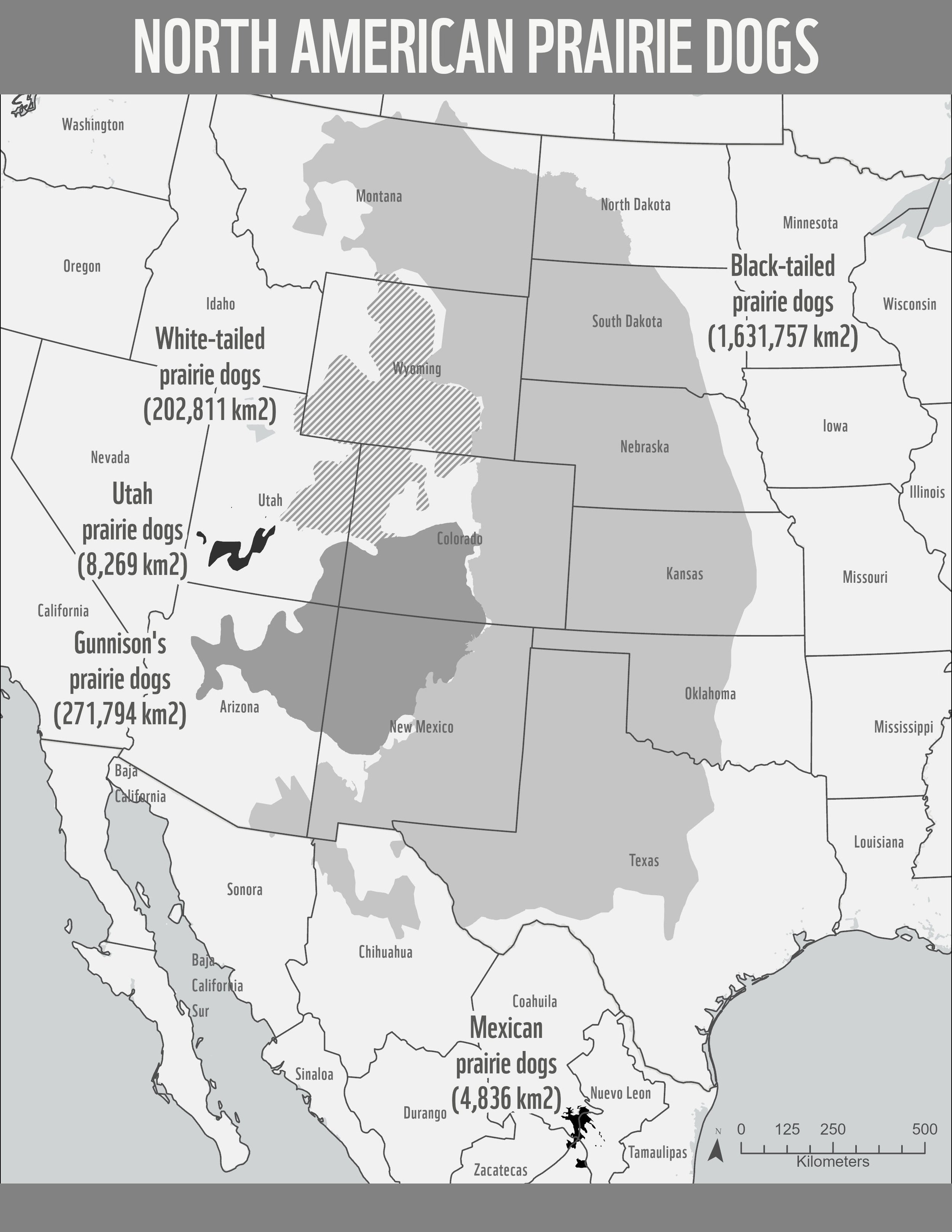
Prairie Dog historic range map *World Wildlife Fund
Prairie dogs are herbivores that influence plant and soil composition over long periods of time. They do not migrate, as other plains species do. Their long-term persistence in one area creates a mosaic of plant diversity for pollinators and supports other wildlife species. Sometimes, there appears to be short, patchy, or no vegetation around a colony - this is NOT indicative of poor stewardship or harm caused by the prairie dogs.
In the past 150 years, we have lost 95% of prairie dog occupancy within their range. With your help we can support their comeback!
Causes of Prairie Dog Decline
In order to stop the decline if prairie dogs and restore their populations, we must address the areas below as individuals, organizations, and government agencies. With collaboration and determination, we can work together to support and coexist with this dynamic, sophisticated species.
Lack of Regulatory Control
Despite the intrinsic and extrinsic value that prairie dogs hold, there continues to be inconsistent efforts to protect them on behalf of government bodies. The regulatory mechanisms to mitigate the threats below, particularly regarding poisoning, are inadequate. In fact, many governments still incentivize the extermination of colonies, even though they are a species of conservation concern in many states. This factor presents both an overarching obstacle and an opportunity for collaboration to restore prairie dogs.
Poisoning
The main cause of historic prairie dog declines was intensive poisoning campaigns carried out by the federal government. Only after prairie dogs shrank to less than five percent of their previous range did poisoning begin to taper off in the 1960s, but it is still widely practiced today.
Sylvatic Plague
Spread through flea bites, sylvatic plague is an exotic disease and a serious threat to prairie dogs because they have little to no immunity once infected. An outbreak can rapidly cause 85 to 99% mortality in a colony, or even wipe the colony out completely.
Habitat Loss
Conversion to cropland has reduced grasslands by 35% percent across the prairie dog’s range. As a result, prairie dogs live mainly in isolated, small habitats that are vulnerable to extirpation from genetic inbreeding, sylvatic plague, and human development
Shooting
Lethal control by shooting can compound an already bleak situation for prairie dogs. Recreational shooting can significantly impact colonies by depressing health, reducing reproductivity, and lower fitness.

Busting Myths & Misconceptions
-
Prairie dogs, cattle, and other livestock can co-exist on grasslands in the majority of well-managed parcels. One of the strongest historical pieces of evidence for coexistence is that prairie dogs evolved alongside another large herbivore: bison. These two animals benefited from each other’s presence, rather than competing.
Many also worry about the risk of livestock injury. However, burrows usually have large mounds around entrances, making them easy for livestock to avoid. The small risk presented by burrows is a manageable one and does not justify wholesale extermination of prairie dogs.
-
It is not easy for prairie dogs to transmit plague to people. Plague is transmitted through the bites of infected fleas, not prairie dogs themselves. Prairie dog fleas are very host-specific and therefore generally avoid humans and other animals (Cully et al., 2006).
Regardless, people should not handle dead (or live) prairie dogs or other wild animals, unless your job involves this work. Further, staying on trails to keep yourself and pets off of prairie dog towns both avoids disturbing wildlife and eliminates the small risk of fleabites. If dead prairie dogs or other dead rodents are discovered, the local wildlife agency and/or health department should be notified.
Prairie dogs are also not known to contract rabies or hantavirus. While they can contract other diseases such as tularemia or plague, in either case they die from these diseases and therefore cannot be carriers.
Monkeypox was first identified in some prairie dogs that were to be sold as pets, where they were exposed to imported infected African rats. Monkeypox is not present in wild prairie dog populations.
Overall, the odds of prairie dogs spreading diseases to humans are incredibly low, and in many cases, risk is exaggerated from misinformation. Therefore, risk of disease does not justify the widespread extermination of prairie dog colonies.
-
Prairie dogs are able to persist and even thrive in areas where land degradation from past human land use has left invasive, non-native vegetation. Prairie dogs are often highly visible in such areas, leading to the misconception that their presence is the cause of the degradation. However, this line of thinking is quickly changing. In fact, the willingness of landowners to coexist with and preserve native species is a sign of respect for the integrity of the native grassland rather than a sign of neglect.
-
In some places, like Boulder County, CO, prairie dogs may appear to be abundant and expanding. However, prairie dogs have declined considerably since the early 1900s across the plains, with most species occupying less than five percent of their historic range. Extermination, plague, land conversion, hunting, and lack of regulatory control are all contributors to their decline.
Different Styles for Different Learners
Dive into more introductory works on the beauty and importance of prairie dogs and North American grasslands
-
The Nature Makers
Rocky Mountain Wild - Meet Your New BFF’s
American Prairie Reserve - Last Wild Places
Nat Geo WILD - The Prairie Dog Life
Prairie Wildlife Research - Black-Footed Ferret vs. Prairie Dog
-
The Black Tailed Prairie Dog by John Hoogland
The Prairie Dog Empire by Paul Johnsgard
Conservation of the Black Tailed Prairie Dog by John Hoogland
Prairie: A Natural History of the Heart of North America: Revised Edition by Candace Savage
Prairie Dogs: Communication and Community in an Animal Society by C.N. Slobodchikoff
Get the Kids Interested Too!
America's Prairies & Grasslands: Guide to Plants and Animals by Marianne Wallace
-
-
What to Do About Prairie Dogs by Humane World for Animals
See Defenders of Wildlife’s work on Prairie Dog restoration here
-